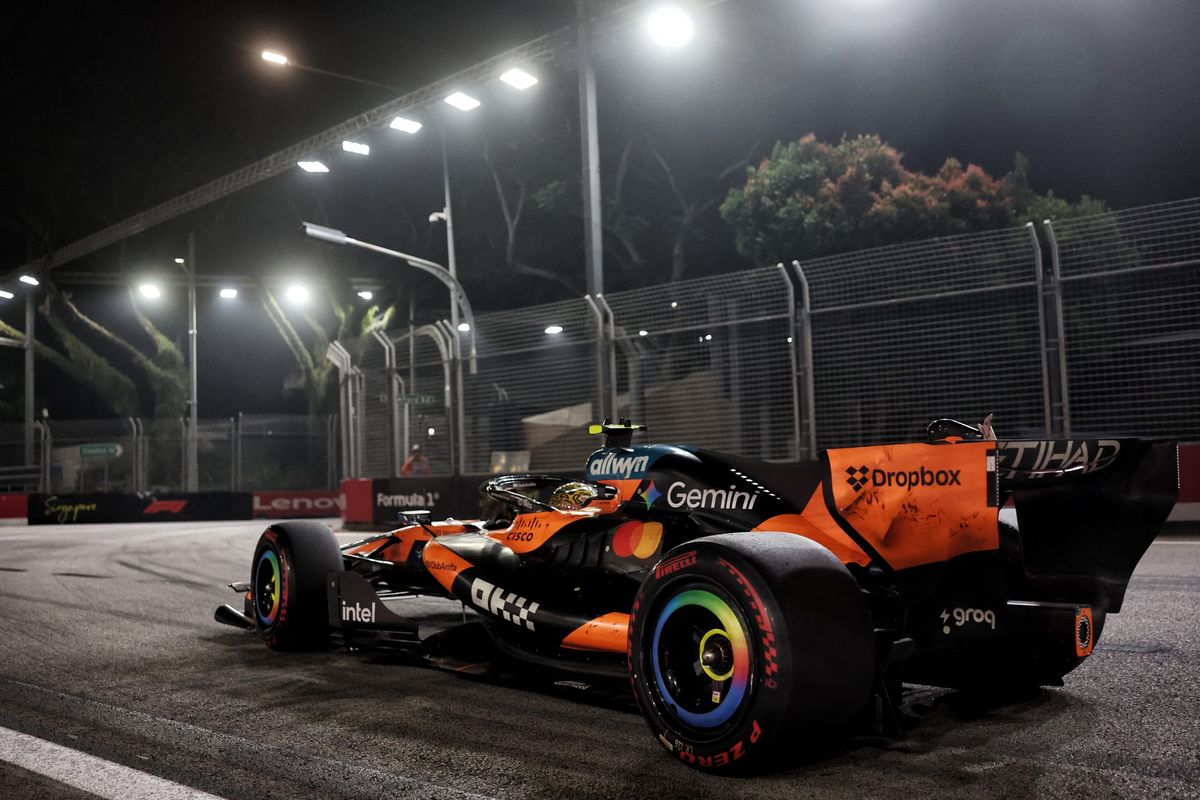
The world of Formula 1 is no stranger to innovation, but sometimes, the governing body steps in to ensure the sport remains competitive and financially viable. Recently, the FIA (Fédération Internationale de l'Automobile) made a decisive move to prevent a looming arms race in wheel rim technology, a development that could have significantly altered the landscape of the sport.
The Wheel Rim Revolution
In 2026, F1 reintroduced the freedom for teams to design their own wheel rims, moving away from standardized parts. This change sparked a wave of innovation as teams sought to optimize tire temperatures, a critical factor in performance. Ferrari, for instance, introduced new wheel rims at the Barcelona Grand Prix, which contributed to Lewis Hamilton’s victory. McLaren followed suit, experimenting with designs to better warm front tires and cool rear ones.
Pirelli, F1’s tire supplier, noted the significant impact of these custom designs. Simone Berra, Pirelli’s chief engineer, remarked, ‘It's quite a significant variation. What we have seen this year is that generally stabilized conditions are much lower than in the past, and this is because the rim basically is cooling the whole wheel, and the tyres themselves.’
The Looming Arms Race
As teams began to see the benefits of these innovations, concerns arose within the FIA. The fear was that teams might invest heavily in developing separate wheel rim designs for qualifying and race sessions. This strategy could optimize tire temperatures for a single flying lap in qualifying, while another design would be used to keep tires cool throughout the race.
Such a development would not only escalate costs but also create an uneven playing field, favoring teams with deeper pockets. One commenter observed, ‘I don’t get why there’s a concern about a spending war when all teams are subject to a cost cap.’ However, another pointed out, ‘Apparently teams are circumnavigating the cost cap, such as letting non-F1 staff share their workspace.’
The FIA’s Intervention
To address these concerns, the FIA introduced new regulations for 2027, approved by the World Motor Sport Council. These rules mandate that teams use a single specification of wheel rims from the moment the car enters pre-parc ferme before a sprint race or grand prix. This means no swapping rims between qualifying and the race, ensuring consistency and fairness.
The move has sparked debate among fans and insiders. Some argue that the FIA is stifling innovation, while others see it as a necessary measure to maintain the sport’s integrity. As one commenter put it, ‘They don’t prevent any development whatsoever. They simply added rims to parc ferme. That’s it. They were excluded before.’
Why It Matters
The FIA’s decision highlights the delicate balance between innovation and regulation in F1. While technological advancements are a hallmark of the sport, unchecked development can lead to spiraling costs and an uneven competitive landscape. By halting the wheel rim arms race before it began, the FIA aims to ensure that F1 remains a battle of skill, strategy, and engineering, rather than a mere contest of financial might.
As the sport continues to evolve, such interventions remind us that the essence of F1 lies not just in pushing boundaries, but in doing so within a framework that promotes fairness and sustainability. The wheel rim saga may be over, but it leaves us with a critical question: How can F1 continue to innovate while keeping the sport accessible and competitive for all teams?

