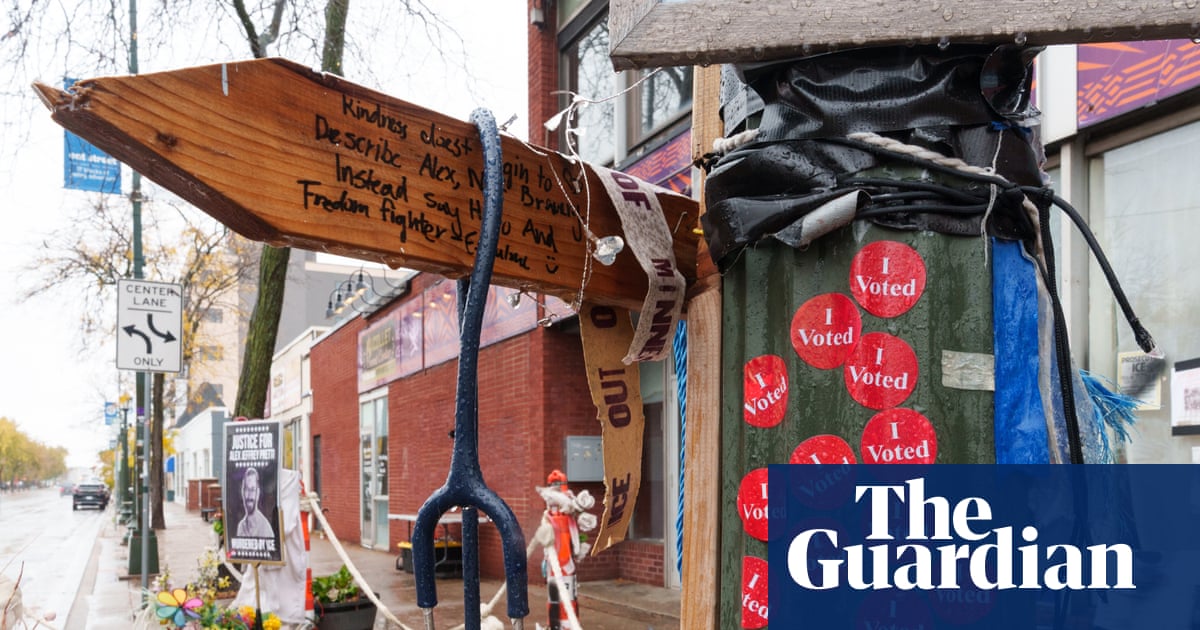
On a rain-slicked Tuesday in Minneapolis, voters arriving at community polling places carried more than just their decisions for local and national office. For many in the Twin Cities, casting a ballot was tied directly to the memory of two local residents whose deaths earlier this year transformed the region into a central flashpoint over federal immigration policy.
Following their trips to the ballot box, residents made their way to makeshift memorial sites dedicated to Alex Pretti, a 37-year-old intensive care unit nurse at the Veterans Affairs medical center in Minneapolis, and Renee Nicole Good, a local writer and mother of three. Both US citizens were killed in January during a large-scale federal enforcement drive known as "Operation Metro Surge." By afternoon, the rain-dampened surfaces of the memorials were dotted with bright oval "I Voted" stickers, turning quiet spaces of mourning into visible acts of civic reflection.
A Local Tragedy with National Resonance
The operations conducted in late 2025 and early 2026 brought an unprecedented federal presence to the Minneapolis region. In response, local neighborhood networks organized rapid-response communications to track law enforcement activity and assist community members. Tensions escalated sharply after the fatal encounters involving Good and Pretti, igniting months of widespread protests, legal challenges, and community grief.
For former colleagues and neighbors, the loss remains an unhealed wound. A retired physician who worked alongside Pretti recalled his professional dedication and standing within the hospital. "I knew Alex Pretti," he said, choking up as he discussed his vote and the circumstances surrounding Pretti's death. "I just knew that he was a competent nurse – a really, really liked guy. And he was assassinated."
As the midterm election season unfolded, much of the community energy that fueled early-year rapid-response networks pivoted toward electoral participation. With key races on the ballot—including contests for the US Senate, governorship, and congressional seats—voters described feeling a heightened sense of purpose at the polls.
"I felt like my vote felt a little bit more in touch with some of the things that happened earlier this year in the city," noted another local resident who brought his sticker to Good’s memorial. "So I felt like it was just the right thing to do – to come pay some respects and attach my vote to what happened here."
The Polling Place and the Memorial
Across the city, civic groups and faith leaders sought to maintain stability throughout Election Day. In a predominantly Somali neighborhood, the Rev. Shandon Klein of Park Avenue United Methodist Church spent the day keeping watch near a local polling site.
"There’s a general, just, feeling of empowerment and really excited to get out there and vote," Klein said, describing her presence as an effort to ensure a non-anxious environment and protect open access for all eligible voters.
Despite administrative threats during the campaign to deploy federal law enforcement to monitor election locations, local officials reported no such presence on polling grounds during voting hours.
Grief, Accountability, and the Ballots Cast
The visual tribute of voting stickers left on street corners, lamp posts, and temporary shrines has resonated far beyond the physical neighborhoods where Pretti and Good lived. On lookers and community members described the emotional weight of seeing medical tools, personal items, and handwritten notes surrounded by evidence of high voter turnout.
"I'm at the front desk at work (in Minneapolis) and I burst into tears when I saw this," one local resident shared. "We hold each other in this city. We are one neighborhood and we are stronger than they are."
For others, the act of placing a sticker on a memorial serves as a demand for legal transparency and future official scrutiny regarding the events of January. Local authorities have previously cited federal jurisdictional hurdles and a lack of access to key personnel as obstacles to completing full independent investigations.
"The footage deserves a thorough independent investigation and anyone found responsible should be held accountable regardless of their position or political connections," noted one observer following the election activity.
As election workers begin the process of tabulating results across Minnesota, the physical remnants of Election Day remain affixed to the neighborhood memorials—a quiet, collective statement that for this community, the ballot box and the act of remembrance are inextricably linked.


